When you buy through links on our articles, Future and its syndication partners may earn a commission.

Three Chinese astronauts finally have a reliable way to get home from orbit.
The uncrewed Shenzhou 22 spacecraft arrived at Tiangong space station today (Nov. 25) at 2:50 a.m. EST (0750 GMT and 3:50 p.m. Beijing time), about 3.5 hours after launching to orbit atop a Long March 2F/G rocket.
Shenzhou 22 is an unprecedented mission for China — an emergency flight mounted on a short timeline to help out three astronauts who have been "stuck" on Tiangong for the past 10 days.

Those astronauts arrived at the station Oct. 31 for a six-month stay. Their mission, Shenzhou 21, took over from the three-astronaut Shenzhou 20 flight, which was scheduled to come home on Nov. 5.
But things got complicated when Shenzhou 20's departure was delayed after inspections revealed a crack in the window of the crew's return spacecraft. The damage, likely inflicted by a space debris strike, made the Shenzhou 20 vehicle unfit to carry astronauts on the harrowing trip down through Earth's atmosphere, Chinese space officials determined.
So, the Shenzhou 20 trio came home in the newly arrived Shenzhou 21 spacecraft, touching down safely on Nov. 14. That solution solved one problem but created another, leaving the Shenzhou 21 crew without a safe way to get home in the event of an emergency.
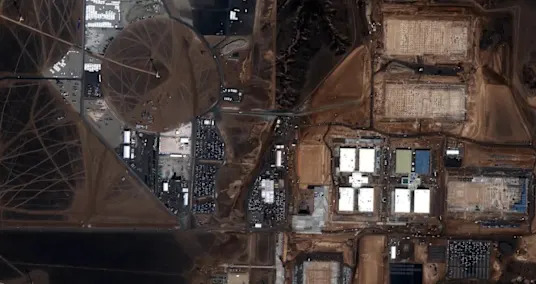
China is prepared for such eventualities, however. The nation keeps a backup Long March 2F/G rocket and Shenzhou capsule in a state of near-readiness at the Jiuquan Satellite Launch Center in the Gobi Desert and can fast-track a launch should the need arise.
China activated this contingency plan in the wake of the Shenzhou 20 debris strike, getting the uncrewed rescue mission off the ground just 20 days later.
Shenzhou 22 provides "a successful example for the international aerospace field in efficiently responding to emergencies," the China Manned Space Agency (CMSA) said in a statement today.
"The success of this mission fully demonstrates the advantages of the new national system, profoundly interprets the concept of 'life first, safety first' in China's manned spaceflight, comprehensively verifies the scientific reliability of the 'one-for-one, rolling backup' strategy for China's space station mission, and practically tests the rapid response and emergency handling capabilities of the entire project," CMSA officials added.
The damaged Shenzhou 20 capsule, meanwhile, is still docked to Tiangong. It "will remain in orbit to conduct relevant experiments," according to the CMSA statement. That space stay will have to end in the next five months or so, however; Shenzhou 20 occupies a docking port that will be needed by the next crewed flight to Tiangong, Shenzhou 23, which is expected to launch in April 2026.
LATEST POSTS
- 1
 Curl Up With Some Hot Chocolate And Watch Mighty Car Mods Explore Japan In A Honda City Turbo II
 - 2ByHeart sued over recalled formula by parents of infants sickened with botulism
- 3Senior's Manual for Obtaining a Hyundai Ioniq EV: Tips
- 4Woman gives birth on roadside after hospital allegedly sent her home: Family
- 5What is colostrum? And should you be taking it?


- Surprising links between autism, Alzheimer’s could change how we treat both
- Chief of Staff Zamir warns IDF will collapse due to lack of manpower, raises 'ten red flags'
- Blood pressure drug recalled for possible cross-contamination
- Step by step instructions to Keep up with the Life span of Your Kona SUV's Battery Duration
- Iran war fuels fears of new inflation wave among German consumers
- Google to Use Natural Gas to Power Massive Data Center in Texas
- 10 Famous Frozen yogurt Flavors All over The Planet
- Nigeria police charge Joshua driver with dangerous driving over fatal crash
- The most effective method to Apply Antiquated Ways of thinking in Current Brain science Practices