When you buy through links on our articles, Future and its syndication partners may earn a commission.

Earth's orbital environment is becoming increasingly crowded. Thousands of satellites—many of them inactive, damaged, or out of fuel—now circle the planet alongside fragments of debris from past collisions.
As more and more satellites enter orbit, one of the biggest questions becomes: how can these satellites approach and maneuver around each other safely? To answer that question, Luxembourg-based companies LMO and ClearSpace carried out a carefully designed simulation using the European Space Agency's Guidance, Navigation and Control Rendezvous, Approach and Landing Simulator (GRALS).
What is it?
GRALS is part of ESA's Guidance, Navigation and Control Test Facilities and is built to recreate close-proximity operations in space with remarkable realism. The satellite model shown in this image was developed by ClearSpace to replicate the geometry, materials, and visual complexity of real satellites.
Its crinkled gold thermal insulation, metallic structures, and the cup-shaped reflective thruster are not just aesthetic details but critical features that influence how light behaves in space and how cameras perceive an object during a rendezvous.
To ensure reliability, engineers combine computer-generated imagery used to train AI systems with physical testing on increasingly realistic models. Smaller models simulate long-range approaches, while larger, high-fidelity replicas like the one shown are used to test the most delicate, close-range phases of a rendezvous.
Where is it?
This photo was taken at the ESA's technical center, ESTEC, in the Netherlands.

Why is it amazing?
The thousands of satellites orbiting Earth pose growing risks to operational spacecraft and to the long-term sustainability of space activities. Before a spacecraft can refuel, repair, or safely deorbit another satellite, it must be able to see, identify, and approach its target with exceptional accuracy. Vision-Based Navigation systems are key to making this possible. Much like self-driving cars rely on cameras and AI to interpret their surroundings, VBN-equipped spacecraft must interpret light, shadow, reflections, and rapidly changing viewpoints in the harsh environment of space.
Facilities like GRALS play a critical role in bridging the gap between theory and reality. By testing real hardware against realistic satellite models under space-like lighting conditions, engineers can expose weaknesses, validate AI training, and build confidence that autonomous systems will behave safely once deployed in orbit.
Want to learn more?
You can learn more about satellite crowding and space junk.
LATEST POSTS
- 1
 Treason trial of South Sudan's suspended VP is further eroding peace deal, UN experts say
 - 2Deadly heat worldwide prompts $300 million for climate health research at COP30
- 3Travels to Dream Objections in Europe
- 4'No Kings' protests recap: More than 8 million turned out across all 50 states, organizers say
- 5Bonk.fun’s April Fools Joke Targets Israel, Sparks Debate



- Ukraine's new defense minister just outlined how dire its troop shortage has become
- US measles cases surpass 2,000, highest in 30 years: CDC
- A definitive Handbook for Securities exchange Money management
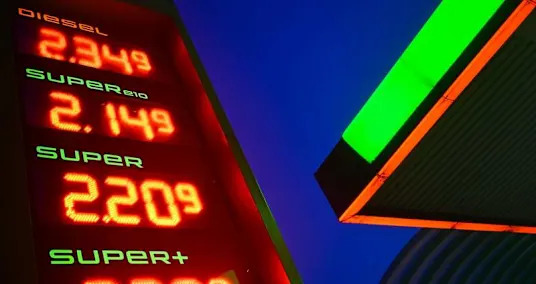
- Consumer experts: German petrol hikes rule won't bring down prices
- 10 Fundamental Tips and Deceives to Lift Your Cell phone's Exhibition
- 6 Novice Cameras for 2024: Ideal for New Picture takers
- McDonald's is bringing two 'KPop Demon Hunters' meals to McDonald's. Here's what they include and when they launch.
- Step by step instructions to Remain Spurred While Chasing after a Web-based Degree
- From Fledgling to Master: Self-awareness in a Side interest