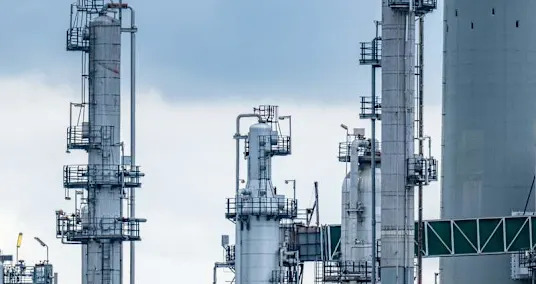
Beyond oil, the Strait of Hormuz blockade is now rippling through another critical artery of the global economy: fertilizers.
Analysts warn this disruption could spiral into a multi-country food crisis well beyond the energy markets.
The Iran War's Quiet Domino Effect
Around one-third of the world's seaborne fertilizer trade moves through the Strait of Hormuz. Countries exposed to instability in the Persian Gulf export nearly half of the global urea and 30% of the ammonia, two nutrients essential for crop growth.
Follow us on X to get the latest news as it happens
https://twitter.com/jackprandelli/status/2040727009546940709?s=20
Since the conflict began on February 28, shipping through the strait has collapsed by more than 95%, according to UNCTAD. The chain reaction is straightforward and severe: no fertilizer → smaller harvests → spiking food prices → basic staples become unaffordable for millions.
This is not a distant risk. It is already unfolding. Granular urea prices in Egypt, a major global benchmark for nitrogen fertilizers, have jumped to roughly $700 per metric ton from a pre-war range of $400 to $490.
“Urea fertilizer is up 50% since the Strait closed five weeks ago. 30% of the world's fertilizer passes through Hormuz. The Gulf produces nearly half of global urea and 30% of ammonia. European and African farm markets are already paying for it,” The Hormuz Letter posted.
The Food and Agriculture Organization (FAO) projects global fertilizer prices will average 15% to 20% higher in the first half of 2026 if the disruption persists. FAO Chief Economist Máximo Torero called the blockade one of the most severe shocks to global commodity flows in recent years.
UBS economist Arend Kapteyn projects fertilizer prices will rise 48% year over year, pushing global food prices up 12%.
Why Timing Makes This Worse
The timing of the disruption is especially critical. In countries like India, fertilizer shortages directly affect planting decisions during the kharif season. Miss this window, and the consequences are locked in for the rest of the year.
“Procurement for the kharif season typically begins in May, ahead of sowing of crops such as rice and cotton in June and July, leaving a narrow window before fertilizer shortages could start to affect the harvest yield,” The Guardian reported.
The crisis is structural, not just logistical. The Hormuz disruption could have food supply consequences lasting well beyond any ceasefire or resolution.
https://twitter.com/ekwufinance/status/2039717288471875588?s=20
Shanaka Anslem Perera argues that the 2026 crisis mirrors Sri Lanka’s 2022 collapse, but instead of a policy move, it’s driven by supply disruptions from the Strait of Hormuz.
LATEST POSTS
- 1
 Virtual National Science Foundation internships aren’t just a pandemic stopgap – they can open up opportunities for more STEM students
 - 2The pinch at the pump continues on
- 3Flu season is ramping up, and some experts are "pretty worried"
- 4'Dancing With the Stars' Season 34 finale: Who might win the mirror ball trophy? Where do the remaining contestants rank?
- 5FDA claims on COVID-19 vaccine safety are unsupported by reliable data – and could severely hinder vaccine access




- Rebecca Gayheart on her 'very complicated' relationship with Eric Dane: 'I am always going to want the best for him'
- James Webb Space Telescope spies mysterious high-energy radiation in star nursery
- 74 suicide warnings and 243 mentions of hanging: What ChatGPT said to a suicidal teen
- NASA shares first photos of Earth taken by Artemis II
- Environmental groups urge Germany to cut oil and gas dependence
- 'Not the moon that I'm used to seeing': Artemis II astronauts describe seeing the far side
- Instructions to Distinguish the Wellbeing Dangers Related with 5G Pinnacles
- German official report: Teen social media ban faces legal hurdles
- Consumers advised to dispose of 19 cooking pans due to lead leaching risk, FDA reports