By Nqobile Dludla
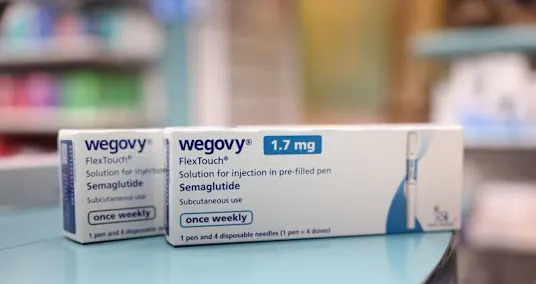
JOHANNESBURG, March 25 (Reuters) - Novo Nordisk is cutting South African prices of its weight-loss drug Wegovy for a second time since it launched in August, local executives said on Wednesday, pointing to fierce competition in a market led by rival Eli Lilly.
The Danish drugmaker launched Wegovy in South Africa in August, when reference pricing was uncertain due to talks with the U.S. administration on its proposed "most-favoured nation" policy linking U.S. drug prices to those in peer countries.
"We were of the view that the prices at the time were not conducive for the South African market," Thabeng Leping, who oversees market access and public affairs for Novo Nordisk South Africa, told Reuters on the sidelines of an event about obesity.
"Because we couldn't delay the launch, we just decided we'll fix it as we go along," he said. "So we reduced our prices in December. We've submitted another reduction of our prices yesterday."
The lowest injected dose of Wegovy has dropped from 3,090 rand ($183) to 1,873 rand, while the highest dose has fallen 27% to 3,746 rand. A further 12% cut to the 1.7 mg dose - the second highest - is awaiting approval, Leping said.
Eli Lilly's rival Mounjaro starts at about 3,600 rand. Its share of the South African market grew to 52% at the end of January, Aspen Pharmacare, the official seller of Mounjaro, said this month, predicting more than 1.3 billion rand ($77 million) in sales in the year through June.
Novo declined to give local sales figures, saying only that its products were doing "extremely well".
Speaking on a panel at the event, Novo South Africa General Manager Sara Norcross said the company intends to introduce its Wegovy pill locally "as soon as possible".
Both Novo and Lilly face competition from unauthorised copycat versions of their drugs, which Norcross said were used by one in two people on weight-loss treatments in South Africa despite adverse outcomes.
Novo has pursued legal action against a local compounder, while the health regulator is moving to classify such products as "undesirable."
($1 = 16.9093 rand)
(Reporting by Nqobile Dludla; editing by Philippa Fletcher)
LATEST POSTS
- 1
 Spanish police and soldiers track boars, reinforce farm security amid swine fever outbreak
 - 2He walked on the moon in 1972. This is his advice for the Artemis II astronauts.
- 3Supreme Court case about ‘crisis pregnancy centers’ highlights debate over truthful advertising standards
- 4Find the Wonders of the Silk Street: Following the Antiquated Shipping lanes
- 512 Once-In-A-Lifetime Travel Experiences To Add to Your Bucket List





- Instructions to Improve Your Mental Exploration with Cutting edge Measurements
- Saturn shines with the waxing moon at sunset on Nov. 29
- Savvy Tips for Seniors Hyundai IONIQ EV
- Greenland’s melting ice and landslide-prone fjords make the oil and minerals Trump is eyeing dangerous to extract
- Turning into a Sharp Financial backer: Individual budget Wins
- True serenity: Investigating Emotional well-being and the Advantages of Contemplation
- Man threatens attack on German high-speed train, injures several
- Find the Insider facts of Viable Advertising: Building a Positive Brand Picture
- Transcript: Scott Gottlieb on "Face the Nation with Margaret Brennan," Dec. 7, 2025